Introduction
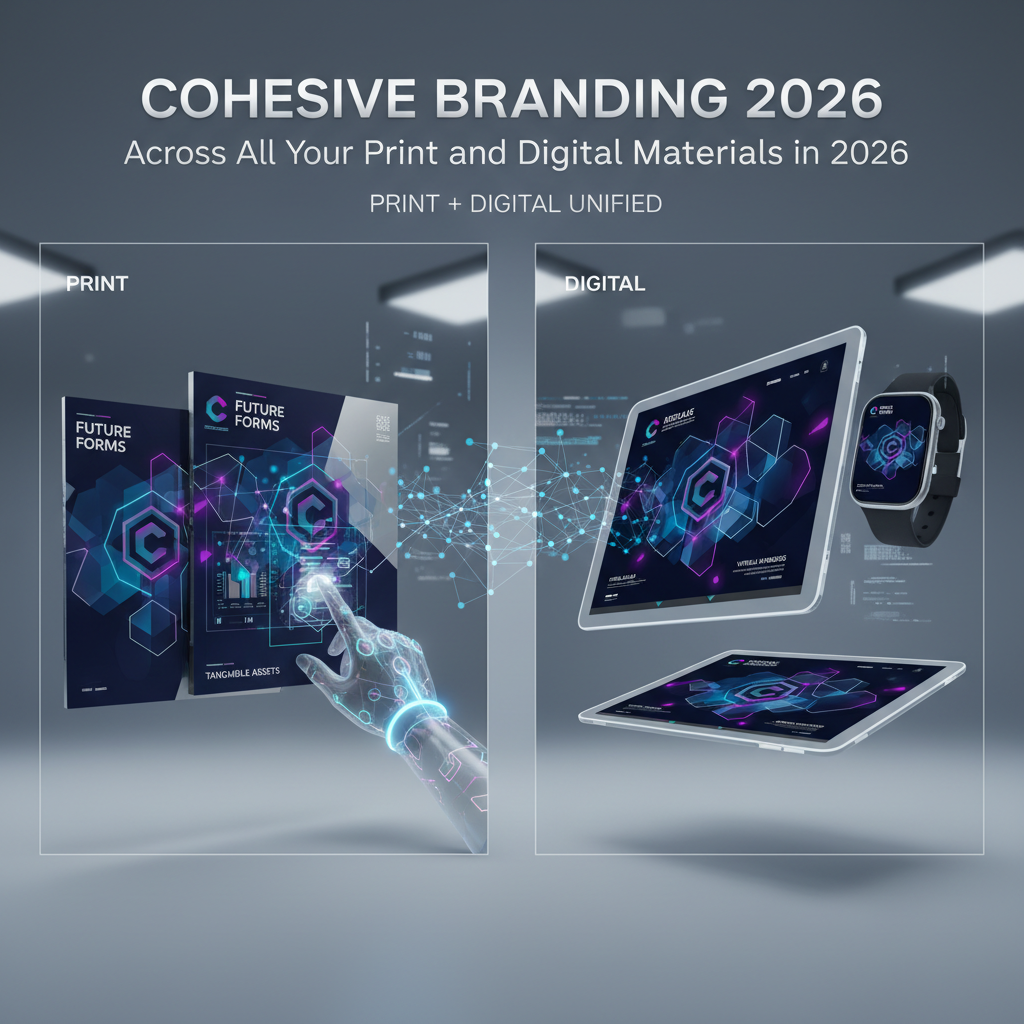
In 2026, keeping your brand consistent across all platforms—print and digital—is more important than ever. Customers expect a unified experience, which builds trust and makes your brand easier to recognize. This guide covers the latest tactics to align your branding efforts across all materials effectively.
Understanding the importance of cohesive branding
Consistent branding makes your audience see your company as reliable, professional, and memorable. Disconnected visuals or messages can weaken your brand’s impact and cause confusion. Keeping colors, fonts, tone, and images aligned across channels creates a smooth experience that builds loyalty.
Key strategies for achieving cohesion
1. Develop a detailed brand style guide
A thorough style guide is essential for consistent branding. It should cover logo use, color schemes, fonts, imagery style, tone of voice, and messaging rules. Regular updates keep it relevant as your brand evolves and digital trends change.
2. Use technology to manage your brand
By 2026, tools like BrandSync or Canva Brand Kit let you centralize assets and ensure everyone uses the latest approved versions. Automated systems help keep branding consistent across teams and platforms.
3. Create templates and modular systems
Standard templates for documents, presentations, social media, and print make it easier to keep visuals uniform. Modular design systems also allow for quick updates and scalable branding without losing consistency.
4. Harmonize your visual identity
Make sure your colors, fonts, and images match across all media. AI-powered design tools can automatically adapt your assets to different formats while maintaining your brand’s look.
5. Maintain consistent messaging and tone
Align your voice and messages across all channels. Use AI-driven content tools to ensure language stays consistent, especially when multiple team members are creating content.
Best practices for digital and print materials
Digital materials
- Use high-resolution images optimized for various screens
- Meet accessibility standards (contrast, font size, alt text)
- Design responsively for mobile and desktop
Print materials
- Use approved color profiles and quality printing techniques
- Review print proofs regularly for color accuracy
- Keep paper quality and finishes consistent
Monitoring and updating your brand cohesion
Regular checks of your branding help spot inconsistencies. Use analytics and feedback to improve your approach, keeping your brand unified as it grows.
Conclusion
Building a consistent brand across print and digital in 2026 requires planning, the right tools, and ongoing oversight. Setting clear guidelines and using modern technology helps your brand stay recognizable, reliable, and trusted in a digital-first world.